
CRANE HIRE FOR TIGHT & RESTRICTED ACCESS.
Banks Crane and Transport provides restricted-access crane lifting across Wellington, Kāpiti Coast, Porirua, Hutt Valley, Manawatū and Palmerston North. Where a conventional crane cannot easily get close to the load, our compact and spider crane options can often provide another way to get lifting equipment into position.
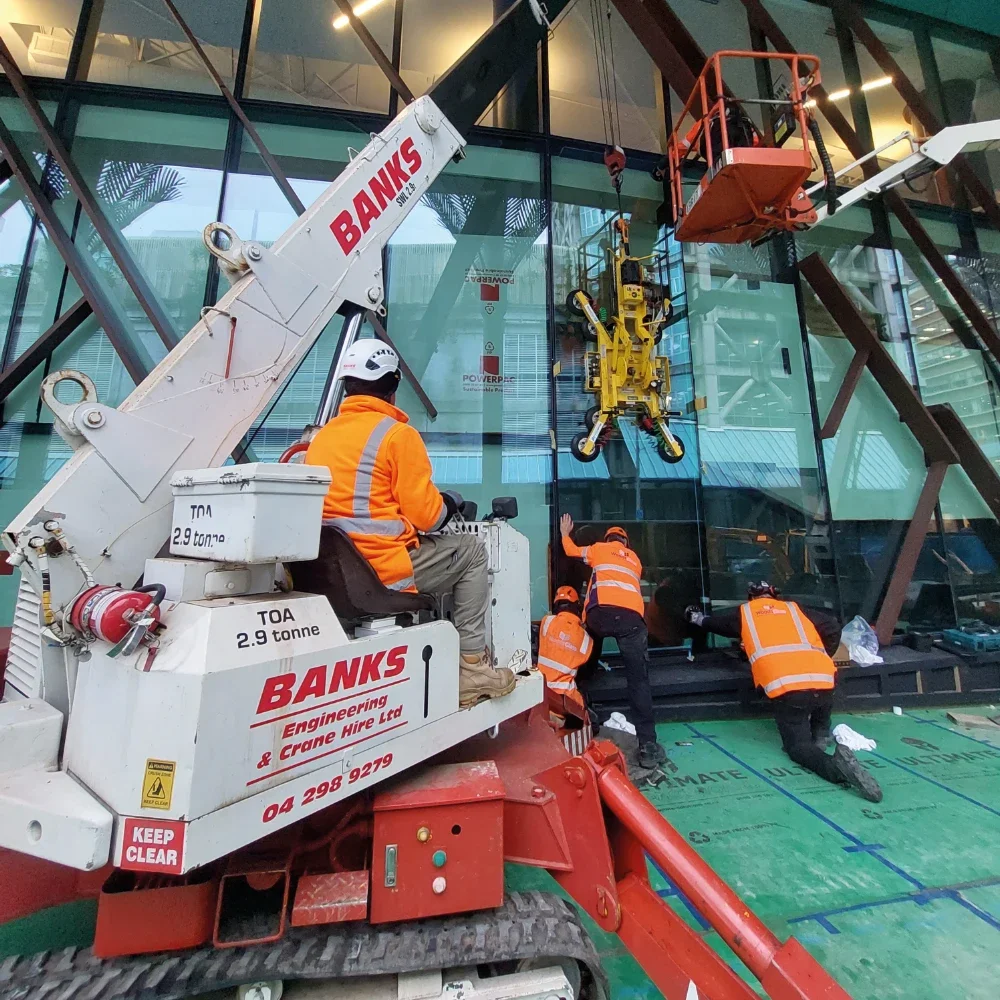
BIG LIFT. SMALL ACCESS.
Some lifting jobs are difficult long before the crane starts lifting. Narrow entrances, buildings, landscaping, fences and limited setup space can all prevent a conventional crane from getting close enough.
That does not usually mean the lift is off the table. Compact and spider cranes give us another option, allowing us to look at ways of getting lifting equipment closer to the work area and setting up where a larger crane cannot.
TIGHT ACCESS DOESN'T USUALLY MEAN WE CAN'T DO IT.
Restricted-access lifting is exactly where compact and spider cranes come into their own. Even when a normal mobile crane cannot get close enough, we can often find another way to get lifting equipment into position.
The important part is seeing the site first. For restricted-access jobs, we generally need to carry out a site visit so we can check the route in, available setup space, ground conditions, obstacles and the final lift position before confirming the crane and lifting plan.
ACCESS ROUTE
We check gates, driveways, openings and the route through the site to work out how we can get the crane into the lifting area.
CLEARANCES
Width, height and surrounding obstacles help us determine which compact crane can physically reach the work area.
SETUP SPACE
Once we're in, we check where the crane can safely set up and establish the working position needed for the lift.
FINAL LIFT
We confirm the load weight, working radius and final placement so the crane has the capacity and reach to complete the job.
SEE THE SITE. PLAN THE ACCESS. GET THE CRANE IN.
Restricted-access work generally starts with some basic job details followed by a site visit. Seeing the access in person allows us to work out the route in, crane position and lifting setup before the job begins.
SEND THE DETAILS
Send the load weight, dimensions, site address and any photos you have of the access route and final lift position.
SITE VISIT
We come out and look at the access, available clearances, ground conditions, setup space and where the load needs to go.
PLAN THE SETUP
We work out how to get the crane into position and confirm which machine provides the required capacity and reach.
LIFT & PLACE
The crane is brought into the work area, set up and used to lift the load into its required final position.
INSIDE. BESIDE. BEHIND. AROUND.
Sometimes the load itself is straightforward, but getting lifting equipment close enough is not. The job may be behind a building, through a narrow access point or in an area where a larger mobile crane simply cannot set up.
That is where compact equipment can make the difference. Getting the crane closer to the work area can often provide a practical lifting solution without trying to complete the entire lift from the road or another distant setup position.
Accessing work areas that are screened from the road or main vehicle setup position.
Compact equipment can provide another option where the route into the site is limited.
Useful where surrounding structures or existing site features limit conventional crane positioning.
CRANE OPTIONS FOR DIFFICULT ACCESS.
The best option depends on how restricted the access is, the load weight, required reach and the space available for the crane to work.
SPIDER CRANES
Compact crane options for work areas where access and available setup space are limited.
COMPACT CRANES
Useful for smaller sites and locations where getting lifting equipment closer to the load is important.
MOBILE CRANES
Where access allows, a mobile crane may still be the better option when additional capacity or reach is required.
RESTRICTED-ACCESS CRANE HIRE ACROSS WELLINGTON, KĀPITI & THE LOWER NORTH ISLAND.
RESTRICTED-ACCESS LIFTING FAQ.
What is restricted-access crane lifting? +
Do you have spider cranes for tight-access jobs? +
Does tight access mean the lift cannot be done? +
Can you lift glass in restricted-access areas? +
Do you need to visit the site first? +
Can you work behind houses or buildings? +
Do you provide restricted-access crane hire in Wellington and Kāpiti? +
TIGHT ACCESS? LET US WORK OUT HOW TO GET IN.
Restricted access does not automatically mean the lift cannot be done. Send us the basic job details and we'll arrange to look at the site, assess the access and work out the right crane and setup for the job.
EXPLORE OUR OTHER SERVICES.
See our full range of crane hire, HIAB, transport, lifting and placement services.